
Galería Campeche in Mexico City exhibited the work of the Austrian artist in the country for the first time; we spoke with her
- Laura Pardo
By the late 1960s, countercultural movements had permeated every creative layer of society, landing—with few filters—in fashion photography and even in advertising. This expansive psychedelic atmosphere became the driving force for an Austrian model—curious-minded and trained at the Vienna Fashion School at Hetzendorf Palace—to step away from the spotlight and move behind the lens. Elfie Semotan (Wels, 1941) picked up the camera and never put it down. She soon moved to Paris, where she studied under the Canadian artist John Cook. Upon returning to Austria, her rebellious and direct style stood out first in advertising and later in fashion, where she opened unconventional paths that are still being explored today. Her own words explain it best:
My work was always more about people than about fashion, although I always loved fashion very much: beauty, the new, and what design can do with and for you—the tools it gives people to express themselves! At that time, we were trying to build a new society; we believed in projects and in the possibility of forging not only a new gaze, but also new ways of thinking and seeing life. I was convinced that advertising could be intelligent and useful. I still believe it, though I’m not sure whether it is ever used that way.
After publishing in the leading fashion magazines and engaging in a long collaboration with Helmut Lang, the artist moved to New York, where her career gained international momentum. In the mid-1990s, she collaborated on several projects with her then-husband, the German artist Martin Kippenberger. Gradually, Semotan’s work moved further into the realm of the visual arts, where it has become increasingly appreciated. Her oeuvre encompasses self-portraiture, nature, and inanimate objects; her gaze does not shy away from stereotypes but lingers on the details that challenge them: an unexpected reflection, a leg caught mid-movement, a displaced object that transforms opulence into strangeness.

Inspiration is more varied than I once thought. It begins with the need to photograph with an independent mind, to find an interesting idea that also creates an understanding of what is important to me. There is so much unnoticed beauty and unimaginable situations, and a wealth of playful thoughts that relate to a need to insist on my unspectacular taste in the sense of preciousness and luxury. I love beauty in every sense, but not as a system to confirm one’s belonging to a particular class or group.
Galería Campeche, in Mexico City, presented the Austrian artist’s work in the country for the first time in the exhibition Color y carne, curated by Úrsula Dávila-Villa and Anna Stothart, which spanned thirty years of work, from 1990 to 2020. The show offered an approach to the themes that have defined her practice. We exchanged ideas with the artist, who lives and works between Vienna and Burgenland, in eastern Austria.
I’m intrigued by the role that chance and “error” play in your work; I find a playful engagement with both elements. Tell me a bit more…
You’re right to ask about chance and error. Yes, it’s a game, but I find the way I’m playing it quite serious. I always try to adhere to the rules I’ve established in my work and in my relationships. That can sometimes be complicated, because I am also seduced by beauty, by perfection, and it’s difficult to resist. I know I run the risk of being misunderstood.
One of the most interesting aspects of the exhibition is how it becomes impossible to find any distinction between commercial work and personal work. Do you make that distinction when you photograph?
I think what I said before explains it: I stick to what forms the basis of my life, my work, and my relationships.
That applies to everything, and I always try to move forward with that conviction, which at times has not been as successful or consistent as I would have liked. I am aware that I may seem very strict, although in reality I am kind and open.
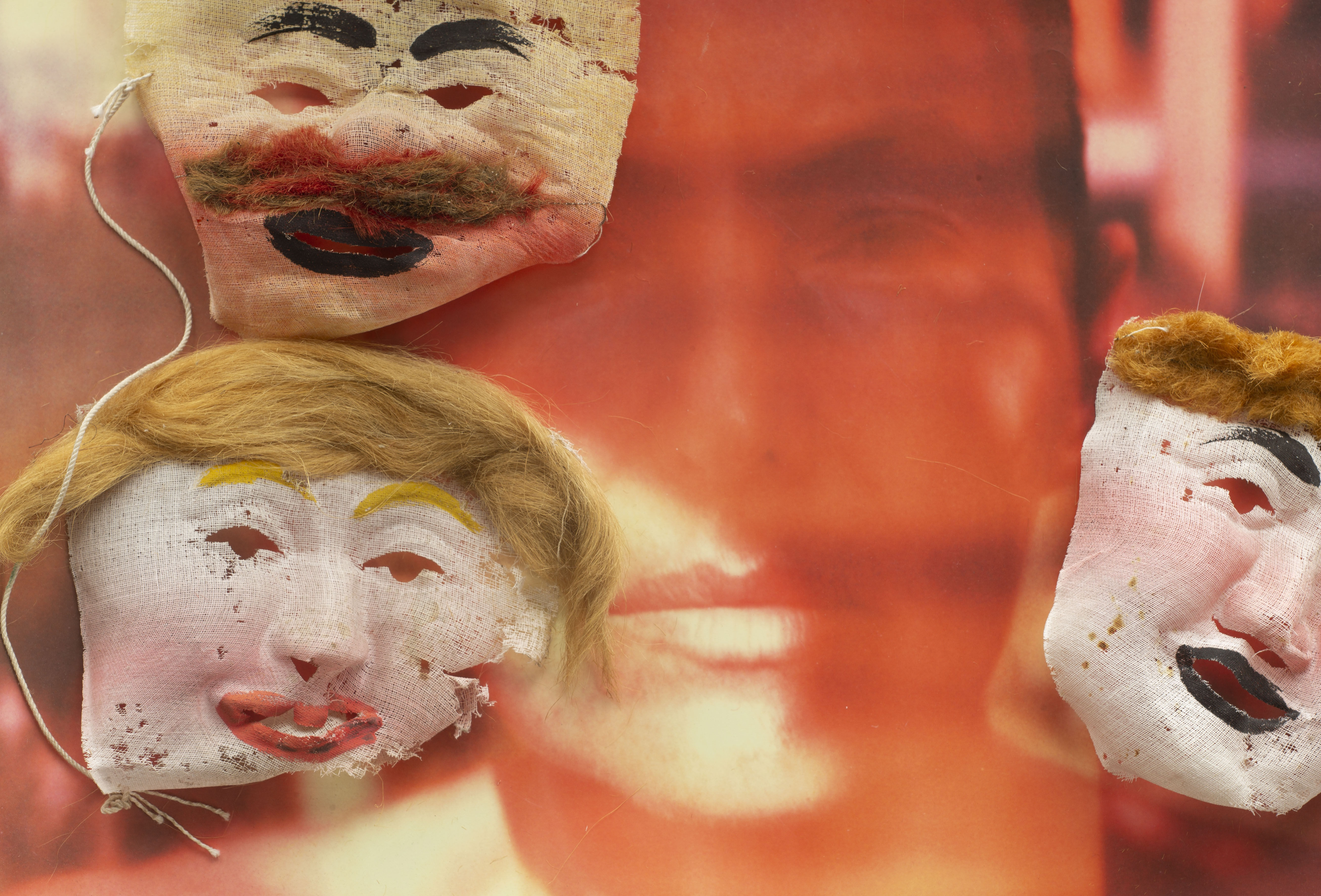 Elfie Semotan, Sin título (Naturaleza muerta con autorretrato), New York (2016/2022). Courtesy of galería Campeche
You have many years of experience in advertising and fashion, two fields that are often questioned in feminist circles, so it strikes me that your gaze has always remained very warm and personal, as far removed as possible from the demands of both industries. I would like to know how you managed that, and whether you have seen changes in recent times, especially with regard to feminism. Do you believe that anything has shifted in favor of women?
I was always concerned about how people were treated in fashion environments, perhaps because I cared deeply about how I was treated, and about the consequences of that treatment. When I am asked how I managed to remain true to what I felt and to my way of working, I realize that I simply had no choice: I needed to do it my way. I was aware that this would not take me to the top of the industry, but I believed I was putting forward a new and interesting way of showing fashion: treating models as human beings, respecting their individuality, and presenting them in settings far removed from the exceptional and luxurious locations that were customary.
I like people; I enjoyed working with all those young individuals, and with many of them I formed bonds during the time we worked together. I felt sad when the job ended, because I felt I needed to nurture that newly established connection. And that, of course, was impossible… Yet even years later, when I saw these people again, they told me they remembered how appreciated they felt when we worked together.